
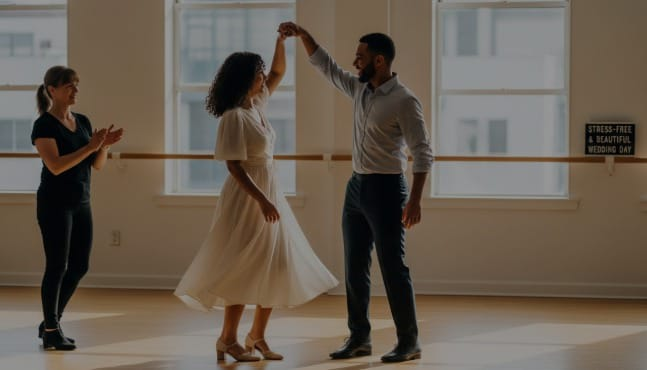
Taking dance lessons before your wedding can turn your first dance from a source of anxiety into an anticipated celebration. Many couples worry about looking awkward or unprepared when they step onto the dance floor for the first time as a married couple. Professional instruction builds confidence, teaches practical skills, and helps you create a memorable moment that feels authentic rather than forced or uncomfortable.
Why Wedding Dance Lessons Matter
Wedding first dance lessons offer benefits that extend beyond learning choreography. Lessons provide structured time for couples to prepare together during a period when wedding planning often keeps you focused on logistics rather than connection. This dedicated time helps you create something meaningful together while building anticipation for your wedding day.
Professional instructors understand the specific context of wedding dances. They know you’re not aiming to become competitive ballroom dancers but rather want to look comfortable and confident for a three-minute spotlight moment. This knowledge shapes how they teach, focusing on making you feel natural rather than turning you into professional performers. Dance Studio Exton specializes in working with engaged couples who have varying levels of experience and various goals for their first dances.
Lessons address specific concerns that many couples share about their wedding first dances. Perhaps one partner has more dancing experience than the other, creating worry about mismatched abilities. Maybe neither of you has danced since high school prom and you feel rusty or uncertain. Instructors help you deal with these challenges and create solutions that work for your specific situation.
Taking lessons together also gives you insight into how you communicate and work together under mild pressure. Learning to dance requires patience, clear communication, and the ability to laugh at mistakes. These skills serve your marriage well beyond the wedding day. Many couples find that the process of preparing their first dance actually strengthens their relationship.
What to Expect from Your First Lesson
Most dance instructors begin with an assessment of your current abilities and comfort level. They’ll ask about your dance experience, watch you move to music, and observe your natural rhythm and coordination. This initial evaluation helps them understand where to start and what teaching approach will work best for you. Don’t worry about impressing your instructor during this assessment. They’ve worked with countless beginners and know how to help people at all skill levels.
Your instructor will ask about your wedding date, your chosen song, and your goals for the dance. Some couples want simple, elegant movements while others hope for more elaborate choreography. Be honest about your comfort level with performing and the amount of time you can realistically dedicate to practice. Good instructors alter their approach to match your needs rather than following a one-size-fits-all curriculum.
The first lesson typically focuses on fundamentals rather than choreography. You’ll learn proper dance frame, which refers to how you position your bodies and hold your arms. Frame creates the foundation for all partner dancing and makes leading and following much easier. Your instructor will also teach you basic footwork and how to move together as a unit rather than two separate people trying to coordinate.
Expect to feel slightly awkward during your first lesson. Everyone does. Learning new physical skills takes time, and dancing with your partner might feel unnatural initially if you haven’t danced together before. Your instructor understands this and will guide you through the uncomfortable early stages with patience and encouragement. Most couples feel noticeably more comfortable by the end of their first session.
Choosing the Right Dance Style for Your Song
Your song selection influences which dance styles work well for your first dance. Instructors help you match appropriate movements to your music’s tempo and feel. Slower ballads typically work best with waltz, rumba, or simple slow dancing. Mid-tempo songs accommodate foxtrot or basic social dancing. Upbeat tracks might call for swing or other energetic styles.
Some couples come to lessons with a song already selected, while others remain open to suggestions. If you’ve already chosen your song, bring a copy to your first lesson so your instructor can listen and suggest appropriate dance styles. If you haven’t decided on music yet, your instructor can help you think through options that match your preferred dance style and skill level.
The waltz offers timeless elegance that suits many wedding songs. This dance features a distinctive three-beat rhythm that creates smooth, flowing movements around the floor. Basic waltz patterns are accessible to beginners, and the style looks impressively polished with just a few lessons. Many couples find waltz strikes the right balance between sophistication and manageability.
Foxtrot provides another excellent option for wedding first dances. This smooth dance involves walking-style movements that progress around the floor. The basic foxtrot is relatively straightforward to learn and works with various musical styles. It looks more dynamic than simple swaying while remaining approachable for couples with limited dance experience.
For couples who want something more passionate, rumba brings romantic intensity to first dances. This Latin dance features slower, more sensual movements and requires good partnership connection. Rumba takes more practice to look smooth but creates an intimate atmosphere that many couples love for their first married dance.
How Many Lessons You Need
The number of lessons depends on your goals, current skill level, and chosen dance style. Most couples take between five and eight lessons to feel prepared for their wedding first dance. Couples wanting simple choreography might need only three or four sessions, while those aiming for more elaborate routines may require ten or more lessons.
Starting your lessons at least three months before your wedding gives you adequate time to learn and practice. This timeline allows for weekly lessons with practice between sessions. Many couples find that spreading lessons over several months helps the movements feel more natural than cramming instruction into a few intense weeks.
Some couples take weekly lessons throughout their engagement, using dance instruction as a regular date night activity. This approach builds skills gradually and gives you something fun to do together during wedding planning. Others prefer more concentrated instruction closer to the wedding date. Discuss your preferences and schedule with your instructor to create a timeline that works for you.
Consider booking a final lesson within two weeks of your wedding. This last session serves as a dress rehearsal where you practice in your wedding attire and make any final adjustments. Your instructor can also remind you of key points and boost your confidence right before the big day. Danza Academy of Social Dance offers these final polish sessions specifically designed to help couples feel prepared and confident.
Making Practice Between Lessons Productive
Practice between lessons is essential for retaining what you learn and developing muscle memory. Most couples should practice at least twice a week for 15 to 30 minutes each session. Practicing in shorter, focused sessions typically works better than occasional long practices. Your brain and body need time to process new movements, and regular practice helps cement the steps.
Create a practice space in your home where you can move freely without obstacles. You don’t need a large area, but you should have room to take a few steps in each direction without bumping into furniture. Some couples move their living room furniture temporarily to create adequate practice space.
Use your phone to record practice sessions. Watching these videos together helps you identify areas that need improvement and shows you how the dance looks from your guests’ perspective. Many students find that small adjustments based on video review make a noticeable difference in how polished the dance appears. You can also share practice videos with your instructor between lessons if you have questions or concerns.
Practice in your wedding day attire at least once before the reception. This includes dancing in your dress shoes, your full suit or tuxedo, and any dress or gown elements that might affect movement. Dancing in unfamiliar formal wear feels different from practicing in casual clothes. This dress rehearsal helps you identify any adjustments needed for comfortable dancing.
Building Confidence for the Spotlight Moment
Many people feel nervous about dancing in front of wedding guests, especially if they have limited experience or feel self-conscious about their abilities. These feelings are completely normal. Your instructor can teach you techniques for managing nervousness and staying present during your first dance rather than getting lost in anxiety about watching observers.
Remember that your guests want you to succeed. They’re watching with happiness and goodwill, not critical judgment. Most people feel moved by the emotional significance of the first dance rather than evaluating technical performance. Your genuine connection with your partner matters infinitely more than flawless execution of steps.
Focus on each other during the dance rather than the watching crowd. Making eye contact with your partner and staying emotionally connected helps you remain present in the moment. This is fundamentally a moment for the two of you, and the guests are simply witnessing your private connection. Keeping this perspective helps reduce performance anxiety.
Practice handling mistakes during your rehearsals. Deliberately mess up a step during practice and work through recovering smoothly. This preparation helps you feel less panicked if something goes wrong during the actual dance. Most mistakes go unnoticed by guests, and your calm recovery matters more than the error itself.
Coordinating with Other Wedding Details
Your dance lessons should coordinate with other wedding planning elements to create a cohesive experience. Share your dance plans with your DJ or band to ensure they understand how you want the first dance announced and if you need any special musical elements like fadeouts or tempo adjustments.
Talk with your photographer and videographer about your first dance plans. They should know which moments to prioritize for capturing images. If your choreography includes featured moments like spins or dips, alert your photographer so they can position themselves to photograph these highlights effectively.
Consider how your dance will flow into the rest of the reception. Some couples immediately invite guests to join them on the dance floor after their first dance concludes. Others transition to parent dances or return to their seats while guests watch additional special dances. Planning these transitions creates smooth reception flow rather than awkward uncertainty about what happens next.
Your dress choice affects how easily you can dance. If you’re planning anything beyond simple swaying, ensure your dress allows adequate movement. Extremely long trains, very tight skirts, or heavy gowns can complicate dancing. Discuss your dress with your instructor and consider if you’ll need a bustle or other alterations to facilitate comfortable movement.
Getting the Most from Your Investment
Dance lessons symbolise both a financial investment and a time commitment. Maximize the value of both by approaching lessons with the right attitude and preparation. Come to each lesson ready to work and learn rather than treating it as purely social time. While enjoying the experience matters, focusing during instruction time helps you progress faster.
Take notes after each lesson about what you learned and any homework your instructor assigns. These notes help you remember what to practice between sessions. Some couples create video notes on their phones, briefly reviewing key points right after their lesson ends.
Ask questions during lessons when something feels unclear or uncomfortable. Your instructor needs feedback to know what’s working and what needs more explanation. Don’t pretend to understand something you haven’t grasped. Clarifying confusion early prevents frustration later when you’re practicing at home.
Be patient with yourself and your partner. Learning to dance takes time, and different people progress at different rates. Avoid criticism or frustration when one person picks up movements faster than the other. Supporting each other through the learning process creates better outcomes and makes the experience more enjoyable.
Your wedding first dance lessons provide practical skills, build confidence, and create opportunities for connection during the intense wedding planning period. With professional guidance from experienced instructors, you’ll develop a first dance that feels authentic to your relationship while looking polished and intentional. The investment in lessons pays off in reduced stress and increased enjoyment of one of your wedding day’s most significant moments.
