
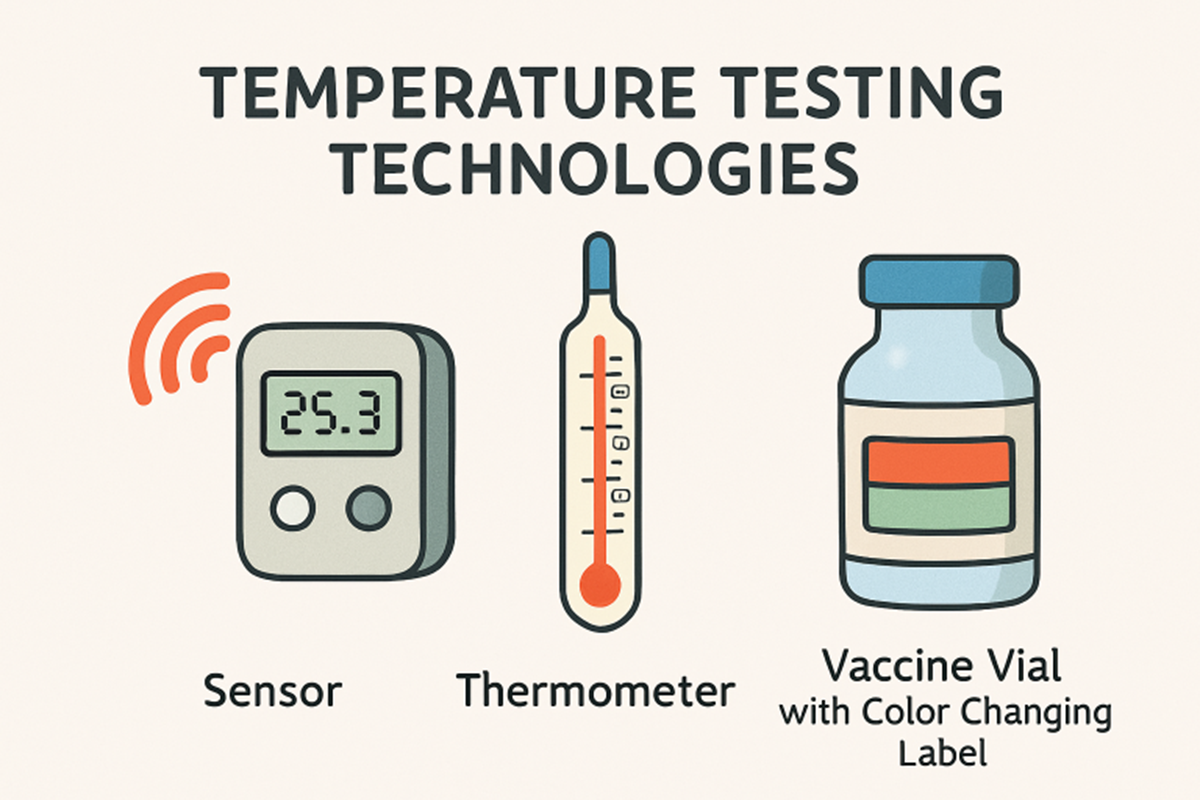
Temperature testing plays an essential role across industries, from electronics and pharmaceuticals to food safety and aerospace. Reliable temperature measurement and control are vital not only for ensuring product quality but also for maintaining safety and compliance with international standards. With rapid developments, companies can now leverage innovative solutions that transform how they monitor and manage temperature. For manufacturing environments, temperature chamber manufacturers are offering increasingly advanced products that support these innovations, redefining processes and results.
Modern temperature testing goes beyond traditional techniques. The integration of high-tech sensors, smart data monitoring, and adaptive systems is significantly boosting both accuracy and operational efficiency. As demands grow across sectors such as semiconductor fabrication, biomedicine, and vaccine logistics, the ability to achieve ultra-precise temperature control has never been more critical. These advances help to ensure safety, enhance research outcomes, and provide the resilience required in today’s fast-paced industrial landscape. Industries as diverse as high-performance computing, energy, and medical research are benefiting from improved temperature-testing solutions. From enabling new heights in electronics miniaturization to driving global health initiatives, the technology supporting temperature control is fundamental to innovation. In food protection, clean energy, and transportation, companies are realizing gains in reliability, throughput, and even sustainability as a direct result of enhanced temperature management.
This article explores groundbreaking advancements in temperature testing and their impact across multiple industries, highlighting new materials, sensor technologies, and smart monitoring methods that are shaping the future of precision temperature control.
Diamond-Based Cooling Solutions
Researchers at Stanford University have unveiled a revolutionary “diamond blanket” process to address escalating heat issues in semiconductor devices. By growing micrometer-scale diamond layers directly on chips, they have reduced temperatures by as much as 70°C in field tests. The process can be conducted at 400°C, making it safe for CMOS circuitry while capitalizing on diamond’s extraordinary thermal conductivity, which is over six times greater than copper. This development represents a significant leap forward for microelectronics and high-density chip design, where heat dissipation challenges are growing as component packaging becomes ever tighter.
Ultra-High Temperature Ceramic Testing Systems
Ultra-High Temperature Ceramic and Composite Systems (UHTC), developed in partnership between Dynamic Systems Inc. and The University of Alabama, have enabled rigorous testing of ceramics above 2000°C. These systems enable rapid thermal cycling and accommodate non-conductive materials such as ceramics, offering faster, reliable results in fields like aerospace, nuclear energy, and manufacturing. Adhering to ASTM standards, UHTC systems combine extreme-temperature capabilities with rapid heating and cooling rates, enabling high-throughput sample analysis and optimizing R&D timelines.
Fiber-Optic Thermometry
Advances in fiber-optic thermometry are reshaping the monitoring of electronic components and industrial systems. Raman-based Distributed Temperature Sensors (RDTS) deliver centimeter-scale resolution, allowing accurate two-dimensional mapping of circuits. With a spatial resolution of 3 cm and ±2°C accuracy, RDTS systems are invaluable in environments where infrared techniques are restricted, such as inside volumetric assemblies or in cryogenic applications. These benefits are spurring broader adoption in sectors that demand granular temperature profiling for performance and safety.
Atom-Based Thermometers
At the National Institute of Standards and Technology (NIST), researchers have harnessed “Rydberg” atoms, which are elevated to extremely high energy states, to create a fundamentally new kind of thermometer. This atom-based device effectively measures ambient heat by tracking its influence on atomic energy levels, offering remarkable accuracy and eliminating the need for factory calibration. The reliance on fundamental quantum behavior ensures stable measurement over time. These breakthrough devices hold promise for improving temperature measurement in fields as varied as quantum research, pharmaceutical manufacturing, and industrial processing. More details on the application and research can be found at NIST News.
Miniaturized Thermocouples
Innovations in thermocouple design are unlocking new research opportunities in life sciences. Miniaturized thermocouples fabricated on Silicon-On-Insulator substrates with doped silicon and gold/chromium junctions enable non-invasive, highly precise temperature monitoring within biological tissues and cells. With a Seebeck coefficient up to 447 μV/K, these instruments deliver both rapid response and stability, attributes crucial for accurate thermal mapping in microenvironments.
Vaccine Vial Monitors
To safeguard global vaccine quality, scientists at the University of Surrey have developed color-sensitive labels that visually indicate when vials are exposed to damaging temperatures. These vaccine vial monitors (VVMs) are pivotal for tracking and ensuring vaccine viability during long-distance transportation and extended storage. From large-scale immunization drives to remote health clinics, VVMs offer a dependable, cost-effective solution that helps ensure successful vaccine administration worldwide.
Wireless Thermal Sensors
Wireless thermal sensor technology is transforming food production by enabling accurate, efficient monitoring across critical control points. Companies like VETENG supply probes made from IP69K stainless steel, ensuring bacterial resistance and compatibility with high-pressure cleaning. These NSF-certified sensors are prized for accuracy (±0.3°C), low maintenance, and audit-friendly features such as QR code traceability. Compliance with HACCP and FDA requirements streamlines plant operations and documentation, while rapid calibration options minimize downtime.
Heat Detector Testing Technologies
Modern heat detector testers now employ precision heating and directed air jets, as seen in the Solo 461’s CAT (Cross-Air Technology), which directs heated air horizontally through the test cup. This ensures accurate activation by directly targeting the sensing element rather than the detector housing, resulting in faster response times, lower power consumption, and minimal wear. These systems are universally compatible, reducing device-specific training and inventory requirements while boosting facility readiness and safety compliance.
Conclusion
Temperature testing technology continues to evolve, driving new standards of precision, convenience, and efficiency for critical industries. Advances from diamond-based cooling to quantum atom-based thermometers, and from automated food safety sensors to intuitive vaccine monitors, each contribute to more resilient and reliable processes across sectors. These innovations not only improve product quality and worker safety but also underpin progress in research and beyond, laying the foundation for tomorrow’s industrial achievements.
